Politics
Verdict likely today on PTI’s plea seeking date for Punjab elections
Published
3 years agoon
By
Farwa
- ECP’s lawyer contends body not liable to give election date.
- Governor tells court that he did not dissolve assembly so he cannot give date.
- PTI lawyer says president willing to give date for polls.
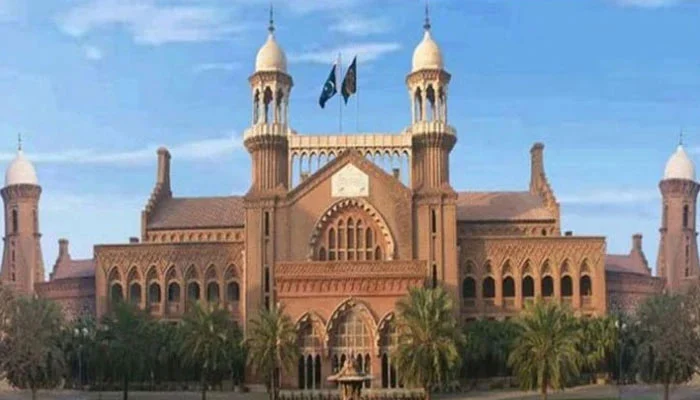
LAHORE: The Lahore High Court (LHC) on Friday reserved its verdict on a plea filed by a citizen and the Pakistan Tehreek-e-Insaf (PTI) seeking a date for general elections in Punjab.
The court is expected to announce the verdict later today.
During today’s hearing, Inspector General of Punjab Police, Dr Usman Anwar and the chief secretary appeared before the court.
Punjab’s top cop and bureaucrat assured the court that they will follow whatever the Election Commission of Pakistan (ECP) decides. The chief secretary also said that they would follow through on the court’s order.
Meanwhile, when the ECP’s lawyer, came to the rostrum, he said that the only issue before the court was who would give the date for the polls. He added that there was talk of a provision in the law allowing the ECP and the president to give a date for the elections.
The lawyer objected to that stance, saying the ECP and the president were not the parties in the case.
“The court cannot issue orders to those who are not made the party in the case,” said the lawyer.
At this, the PTI’s lawyer Barrister Ali Zafar said that they made the Election Commission a party to the case by amending the petition. Upon hearing this, the ECP lawyer said that the president was yet to be made party to the case.
“Your objection is that ECP is not a party [in the case],” asked Justice Jawad Hassan.
The counsel told the court that the commission was not a party in giving a date for the elections. He also asked the LHC to show the law which states that the ECP is liable to give a date for the general election.
“The court itself said that they do not want to issue a verdict which cannot be implemented,” reminded the ECP lawyer. He added that implementing Article 220 was not the electoral body’s job.
“How my client can conduct the polls if it is not being provided with funds?” He also told the court that the ECP requires complete support from the federal government.
“I have objections to the acceptance of this plea. In the law, election date can be delayed,” said the lawyer. He reiterated that there is no law which states that the ECP is bound to give a date for the elections.
Governor asks LHC to reject plea
On the other hand, Governor Baligh ur Rehman’s lawyer Shahzad Shaukat said that allegations have been made against his client in all the petitions.
Shaukat contended that if the governor had dissolved the assembly then he would have been asked to announce the date. He also urged the court to reject the petition for being ineffective.
When the governor’s lawyer pushed the court that the governor was not bound to give a date for the polls, Justice Hassan asked if it was not clear in the Constitution then can the president be asked to give a date for the elections.
“Read Article 48, the president has the same role as the governor,” responded Shaukat.
President willing to give election date
PTI’s counsel Barrister Ali Zafar, while responding to the governor’s lawyer, told the court that the chief secretary and IG had assured the court of performing their duties.
Zafar also contended that the president could give a date for the elections, adding that the question of not giving an election date cannot be left unaddressed.
“Governor, president, and Election Commission can give a date for the polls via a notification. Silence cannot be maintained on this,” said Barrister Ali Zafar. He added that the president has not said no and if the court directs then he will follow orders.
You may like
-
Supreme Court annuls trials of civilians in military courts
-
Nawaz Sharif moves IHC seeking restoration of appeals in graft cases
-
Imran Khan, Shah Mahmood Qureshi indicted in cipher case
-
Nawaz’s return boosts PML-N’s political fortunes: poll
-
Arshad Sharif’s wife files lawsuit against Kenyan police over journalist’s killing
-
Nawaz granted bail in graft cases; arrest warrant suspended in Toshakhana case
Business
Supreme Court annuls trials of civilians in military courts
Published
2 years agoon
By
Farwa
In a unanimous verdict, a five-member bench of the Supreme Court on Monday declared civilians’ trials in military courts null and void as it admitted the petitions challenging the trial of civilians involved in the May 9 riots triggered by the arrest of Pakistan Tehreek-e-Insaf (PTI) chief Imran Khan in a corruption case.
The five-member apex court bench — headed by Justice Ijaz Ul Ahsan, and comprising Justice Munib Akhtar, Justice Yahya Afridi, Justice Sayyed Mazahar Ali Akbar Naqvi and Justice Ayesha Malik — heard the petitions filed by the PTI chief and others on Monday.
The larger bench in its short verdict ordered that 102 accused arrested under the Army Act be tried in the criminal court and ruled that the trial of any civilian if held in military court has been declared null and void.
The apex court had reserved the verdict earlier today after Attorney General of Pakistan (AGP) Mansoor Usman Awan completed his arguments centred around the domain and scope of the military courts to try the civilians under the Army Act.
At the outset of the hearing today, petitioner lawyer Salman Akram Raja told the bench that trials of civilians already commenced before the top court’s verdict in the matter.
Responding to this, Justice Ahsan said the method of conducting proceedings of the case would be settled after Attorney General of Pakistan (AGP) Mansoor Usman Awan completed his arguments.
Presenting his arguments, the AGP said he would explain to the court why a constitutional amendment was necessary to form military courts in 2015 to try the terrorists.
Responding to Justice Ahsan’s query, AGP Awan said the accused who were tried in military courts were local as well as foreign nationals.
He said the accused would be tried under Section 2 (1) (D) of the Official Secrets Act and a trial under the Army Act would fulfill all the requirements of a criminal case.
“The trial of the May 9 accused will be held in line with the procedure of a criminal court,” the AGP said.
The AGP said the 21st Amendment was passed because the terrorists did not fall in the ambit of the Army Act.
“Amendment was necessary for the trial of terrorists [then] why amendment not required for the civilians? At the time of the 21st constitutional amendment, did the accused attack the army or installations?” inquired Justice Ahsan.
AGP Awan replied that the 21st Amendment included a provision to try accused involved in attacking restricted areas.
“How do civilians come under the ambit of the Army Act?” Justice Ahsan asked the AGP.
Justice Malik asked AGP Awan to explain what does Article 8 of the Constitution say. “According to Article 8, legislation against fundamental rights cannot be sustained,” the AGP responded.
Justice Malik observed that the Army Act was enacted to establish discipline in the forces. “How can the law of discipline in the armed forces be applied to civilians?” she inquired.
The AGP responded by saying that discipline of the forces is an internal matter while obstructing armed forces from discharging duties is a separate issue.
He said any person facing the charges under the Army Act can be tried in military courts.
“The laws you [AGP] are referring to are related to army discipline,” Justice Ahsan said.
Justice Malik inquired whether the provision of fundamental rights be left to the will of Parliament.
“The Constitution ensures the provision of fundamental rights at all costs,” she added.
If the court opened this door then even a traffic signal violator will be deprived of his fundamental rights, Justice Malik said.
The AGP told the bench that court-martial is not an established court under Article 175 of the Constitution.
At which, Justice Ahsan said court martials are not under Article 175 but are courts established under the Constitution and Law.
After hearing the arguments, the bench reserved the verdict on the petitions.
A day earlier, the federal government informed the apex court that the military trials of civilians had already commenced.
After concluding the hearing, Justice Ahsan hinted at issuing a short order on the petitions.
The government told the court about the development related to trials in the military court in a miscellaneous application following orders of the top court on August 3, highlighting that at least 102 people were taken into custody due to their involvement in the attacks on military installations and establishments.
Suspects express confidence in mly courts
The same day, expressing their “faith and confidence” in military authorities, nine of the May 9 suspects — who are currently in army’s custody — moved the Supreme Court, seeking an order for their trial in the military court be proceeded and concluded expeditiously to “meet the ends of justice”.
Nine out of more than 100 suspects, who were in the army’s custody, filed their petitions in the apex court via an advocate-on-record.
The May 9 riots were triggered almost across the country after former prime minister Imran Khan’s — who was removed from office via a vote of no confidence in April last year — arrest in the £190 million settlement case. Hundreds of PTI workers and senior leaders were put behind bars for their involvement in violence and attacks on military installations.
Last hearing
In response to the move by the then-government and military to try the May 9 protestors in military courts, PTI Chairman Imran Khan, former chief justice Jawwad S Khawaja, lawyer Aitzaz Ahsan, and five civil society members, including Pakistan Institute of Labour Education and Research (Piler) Executive Director Karamat Ali, requested the apex court to declare the military trials “unconstitutional”.
The initial hearings were marred by objections on the bench formation and recusals by the judges. Eventually, the six-member bench heard the petitions.
However, in the last hearing on August 3, the then-chief justice Umar Ata Bandial said the apex court would stop the country’s army from resorting to any unconstitutional moves while hearing the pleas challenging the trial of civilians in military courts.
A six-member bench, led by the CJP and comprising Justice Ijaz Ul Ahsan, Justice Munib Akhtar, Justice Yahya Afridi, Justice Sayyed Mazahar Ali Akbar Naqvi, and Justice Ayesha Malik, heard the case.
In the last hearing, the case was adjourned indefinitely after the Attorney General for Pakistan (AGP) Mansoor Usman Awan assured the then CJP that the military trials would not proceed without informing the apex court.
Politics
Nawaz Sharif moves IHC seeking restoration of appeals in graft cases
Published
2 years agoon
By
Farwa
- Nawaz’s counsel Amjad Pervez files the petitions in IHC.
- Petition says Nawaz’s absence before court wasn’t intentional.
- Ousted PM was handed 10 years in jail in Avenfield reference.
ISLAMABAD: Pakistan Muslim League-Nawaz (PML-N) supremo Nawaz Sharif has moved the Islamabad High Court (IHC) on Monday seeking restoration of appeals against the accountability courts’ verdicts in the Avenfield and Al-Azizia cases.
Nawaz’s counsel Amjad Pervez filed the petitions in the IHC, requesting the court to hear the appeals on merit as earlier they were discarded for non-compliance when the PML-N supremo did not return from London after he was granted permission by the court in November 2019 to go abroad for medical treatment.
In the Avenfield petition, the PML-N chief maintained that he was sentenced in absentia on July 6, 2018 in Avenfield reference as he could not attend a court hearing in view of his wife’s ailment who was undergoing treatment and on the ventilator at a hospital in London.
Nawaz said his appeals against the Avenfield and Al-Azizia references were not dismissed on merit rather they were discarded for non-compliance.
“[…] the absence of the petitioner before this Hon,ble Court was neither intentional nor deliberate or mala-fide, rather, he was unable to enter appearance due to Medical advice and circumstances beyond his control, unfortunately, his health condition could not improve and the requisite procedures got delayed on account of COVID-19 pendamic, on account of the peculiar background and nature of various serious ailments, he was consistently advised not to travel and stay in close proximity of Healthcare facilities in London for ongoing treatment and planned interventions which facts are duly reflected in the Medical Reports..”
The PML-N supremo implored the court in the petitions to restore the appeal “to its original position along with all interim, incidental and ancillary orders connected therewith and the same may kindly decided on merits in accordance with law in the interest of justice”.
“Any other relief deemed appropriate in the peculiar circumstances of the case be also awarded,” the plea added.
Nawaz had signed legal documents including appeals to be filed in the IHC after returning to Pakistan after four years of self-imposed exile in London on Saturday.
The appeals were dismissed due to non-appearance of Nawaz in the IHC.
Ahead of returning to the country, the former PM had secured protective bail in the graft cases till October 24, which averted threat of his immediate arrest.
In July 2018, the ousted prime minister was handed a 10 year jail sentence in the Avenfield reference for owning assets beyond known income and one year for not cooperating with the National Accountability Bureau (NAB), which was to be served concurrently.
PML-N Chief Organiser Maryam Nawaz was sentenced to seven years in jail in the case but was acquitted in September 2022 along with her husband Captain (retd) Safdar.
In the Al-Azizia Steel Mills corruption reference, Nawaz Sharif was sentenced to seven years in jail on Dec 24, 2018 and then taken to Rawalpindi’s Adiala Jail from where he was shifted to Lahore’s Kot Lakhpat jail next day.
- Qureshi, Khan filed plea under CrPC 265-D to stop indictment.
- Judge rejected plea and went ahead with indictment.
- Court issues notices to witnesses to appear on October 27.
ISLAMABAD: A special court, formed to hear the cipher case registered under the Official Secrets Act, on Monday indicted Pakistan Tehreek-e-Insaf (PT) Chairman Imran Khan and Vice Chairman Shah Mahmood Qureshi.
The hearing of the case was held at the Adiala jail in Rawalpindi by special court judge Abual Hasnat Zulqarnain.
Both the PTI leaders were indicted after they had moved a petition under CrPC 265-D to stop the indictment. The judge while rejecting the petitions stated that the hearing was fixed for indictment and went ahead with it.
Once the charges are framed, the evidence of the prosecution is recorded and the case trial begins. Subsequently, the testimonies and statements of the accused are recorded by the court.
In line with the procedure, the court issued notices to the witnesses to appear on October 27 and adjourned the hearing till then.
According to sources, Qureshi and Khan have pleaded not guilty to the charges.
In the last hearing on October 17, both the PTI leaders’ indictment was deferred till today as the copies of challans submitted by the Federal Investigation Agency (FIA) against the PTI leaders were provided to the accused.
Judge Zulqarnain had scheduled the indictment for the next week as the accused lawyers had refused to receive the copies of the challan during the hearing before the one held on October 17.
In August of this year, Khan and Qureshi were booked under the Official Secrets Act 1923 in the cipher case after the FIA invoked Section 5 of the said law. The diplomatic cable reportedly went missing from Imran’s possession. According to the former ruling party, the cable contained a threat from the US to topple the PTI’s government.
Khan and Qureshi are currently in Adiala jail on judicial remand in the cipher case.
Khan was taken into custody after being sentenced to three years in prison in the Toshakhana case on August 5, 2023. Initially, he was kept in Attock jail but later he was moved to Adiala jail.
It is pertinent to mention here that the IHC on August 29 had suspended the sentence handed down to the PTI chairman in the Toshakhana case.
FIA charge sheet
The FIA, in its challan, stated that the former prime minister and the vice-chairman were found guilty in the matter and requested the court to conduct their trial and sentence them in the case.
According to the sources, former PTI secretary-general Asad Umar’s name was not added to the list of accused. Meanwhile, Khan’s former principal secretary Azam Khan was also named as a “strong witness” in the case.
The FIA also attached Azam’s statements, recorded under Sections 161 and 164, along with the challan, said the sources, adding that the PTI chief kept the cipher to himself and misused the state secret.
The sources also said that Khan had a copy of the cipher but he did not return it.
Moreover, the FIA also attached the transcript of Khan and Qureshi’s speech on March 27 — the day when the former premier brandished a letter claiming it was a cipher from a foreign nation, that wanted his government to be removed from power.
The agency also submitted a list of 28 witnesses to the court with the challan after recording their statements under Section 161.
Sources further revealed that the names of former foreign secretaries Asad Majeed, Sohail Mehmood and the then additional foreign secretary Faisal Niaz Tirmizi have also been added to the list of witnesses.
What is ciphergate?
The controversy first emerged on March 27, 2022, when Khan — less than a month before his ouster in April 2022 — while addressing a public rally waved a letter before the crowd, claiming that it was a cipher from a foreign nation that had conspired with his political rivals to have PTI government overthrown.
He did not reveal the contents of the letter nor did he mention the name of the nation it came from. But a few days later, he accused the United States of conspiring against him and alleged that Assistant Secretary of State for South and Central Asia Affairs Donald Lu had sought his removal.
The cipher was about former Pakistan ambassador to the US Majeed’s meeting with Lu.
The former prime minister, claiming that he was reading contents from the cipher, said that “all will be forgiven for Pakistan if Imran Khan is removed from power”.
Then on March 31, the National Security Committee (NSC) took up the matter and decided to issue a “strong demarche” to the US for its “blatant interference in the internal affairs of Pakistan”.
Later, after his removal, then-prime minister Shehbaz Sharif convened a meeting of the NSC, which came to the conclusion that it had found no evidence of a foreign conspiracy in the cable.
In the two audio leaks that took the internet by storm and shocked the public after these events, the former prime minister, then-federal minister Asad Umar, and then-principle secretary Azam could allegedly be heard discussing the US cipher and how to use it to their advantage.
On September 30, the federal cabinet took notice of the matter and constituted a committee to probe the contents of the audio leaks.
In October, the cabinet gave the green signal to initiate action against the former prime minister and handed over the case to the FIA.
Once FIA was given the task to probe the matter, it summoned Khan, Umar, and other leaders of the party, but the PTI chief challenged the summons and secured a stay order from the court.
The Lahore High Court (LHC), in July this year, recalled the stay order against the call-up notice to Khan by the FIA.
Supreme Court annuls trials of civilians in military courts
Nawaz Sharif moves IHC seeking restoration of appeals in graft cases
Sea conditions ‘very high’ as Cyclone Tej moves towards northwestward
Barwaan Khiladi: Kinza Hashmi discusses her role as Alia
Snap launches tools for parents to monitor teens’ contacts
WATCH: Pakistani traveller deported from Dubai for damaging plane mid-air
Learn First | How to Create Amazon Seller Account in Pakistan – Step by Step
Sajjad Jani Funny Mushaira | Funny Poetry On Cars🚗 | Funny Videos | Sajjad Jani Official Team