
Tech
What has WhatsApp new in store for its users?





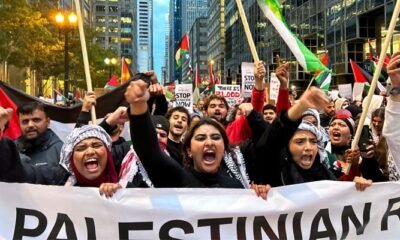








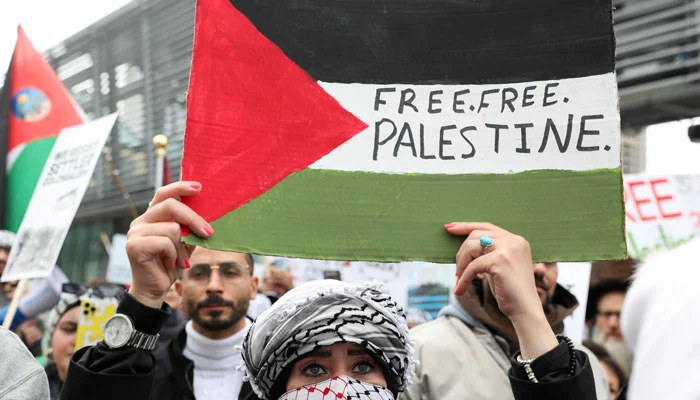
For over a week since Israel’s incessant inhumane attacks against Palestinians intensified, the users of Instagram — Meta’s photo and video sharing app — have raised concerns regarding the big tech company shadowbanning their content and curtailing their freedom of speech, as the world continues to witness human rights violations in Gaza since Hamas — labelled as a “terror organisation” by Western governments — challenged the Benjamin Netanyahu-led government after a surprise attack on October 7.
In the past 11 days, thousands of Palestinians — including over 1,000 children — have been martyred in Israeli airstrikes with its plans to accelerate a ground offensive.
A deadly bombing by Israel, also last night, left an overwhelmingly crowded evangelical hospital in Gaza City destroyed to ashes martyring, at least 500 people in an instant. Hamas’ actions, on the other hand, claimed the lives of around 14,00 Israelis with at least 199 taken as hostages.
Meanwhile, the complaints about pro-Palestine stories and posts on Instagram being shadowbanned came after several users, including influential personalities and content creators with a substantial following as well as those with private accounts, pointed out that the content they are posting on the app is not visible to their followers on the main home feed.
The Cambridge Dictionary described shadow banning as “an act of a social media company limiting who can see someone’s posts (= messages or pictures on social media), usually without the person who has published them knowing.”
Pakistani writer Fatima Bhutto, who is known for being vocal in her support for Palestinians’ right to liberty, said the shadowban seems to be “getting worse”, as she began complaining about issues she has been facing while using the app for the past few days.
“My comments have been locked — only people I follow can post a comment on my page, my views are being restricted as well. My stories and posts are not showing up on people’s feeds,” Fatima told Geo.tv.
Fatima has been consistently indicating about the shadow banning her Instagram account — boasting 111,000 followers — is being subjected to ever since she began posting about Palestinians on her account.
“Still being shadowbanned by @instagram who are limiting my comments and story views. I am learning so much about how democracies and big tech work together to suppress information during illegal wars they are unable to manufacture consent for!” she wrote in a post on X, formerly Twitter, on Monday.
Responding to Geo.tv about the relentless censorship by a major social media website, the writer said her users have to manually check for her stories on the Meta-owned platform, whose founder, Adama Moserri, issued a lukewarm statement on the matter, laying bare his apparent bias towards Israel — a regime armed to its teeth against the weaponless civilians in Gaza.
“It’s an insidious form of control — disrupting your ability to communicate because the tech company doesn’t like what you’re saying. All those posting against the genocide unfolding are being shadow-banned, it’s a concerted effort by Meta,” she added.
Censuring US-based tech companies of bias and complicity in war crimes against Palestinians, The Runaways author said: “It is beyond clear that American tech companies don’t actually believe in the values they espouse — freedom of speech, the value of information, and so on — by suppressing voices speaking out against genocide, they are complicit in violence of terrifying proportions.”
‘On wrong side of history’
Usama Khilji, the director of Bolo Bhi — an advocacy forum for digital rights, said there has been deliberate confusion created by conflating Hamas and all Palestinians, which has led to social media platforms of Meta and X censoring posts related to Palestine.
“This is a content moderation crisis where fundamental international human rights law is being violated by social media platforms, and they just be held accountable by users and global civil society,” the digital rights advocate told Geo.tv.
Khilji, when speaking about the ongoing shadowbanning and censorship by Big Tech platforms, insisted that silencing voices against apartheid and genocide means “social media platforms are on the wrong side of history”.
Intent to initiate discourse
Nazuk Iftikhar Rao, a writer based in Lahore, has an audience of over 8,000 followers on Instagram. On most days, Nazuk shares prose, poetry, and creative photography with her thousands of followers.
But as Israel’s war against innocent Gazans broke out, she has been sharing educational and informative content about the ethnic cleansing of this centuries-old Middle Eastern region’s indigenous population. She has also been sharing resources for donating aid for the war-stricken civilians.
“What I started noticing about my engagement on the platform, particularly with posts and stories related to the Palestinian movement, certain key terms like Palestine, Free Palestine, genocide and occupation etc with captions, were being demoted on the Instagram. I noticed this in terms of the likes and visibility on the platform. My friends said they didn’t see the posts and videos about Palestine. This was back in 2021,” she said, speaking with Geo.tv.
Nazuk said her account was initially public and she would get a lot of engagement on photos of books, selfies, and group photos with friends, garnering hundreds of likes and views in a short time. But posts about Palestine that showed information and text blogs would be demoted to 100 or fewer views. “This was even during 2021.”
“Now I’ve noticed that if I post something about Edward Said, it also immediately gets low engagement. The more he entered the mainstream, popular narrative of Palestine, then posts related to his work also became more targeted.”
“About the algorithms, I don’t know how they work. But from my limited understanding, I’ve noticed that ChatGPT and all the other Artificial Intelligence (AI) platforms are being trained on materials that hold the sentiments, opinions, biases, prejudices of a certain demographic, essentially the Global North,” she said.
The writer maintained that the content that automatically aligned with their ideologies and ideas was not targeted.
Sharing her intent behind posting the content, Nazuk said: “My initial intent of posting was to start a discourse. But not just a conversation or educate [people] because I’m also always learning. I noticed that there was a gap between what my friends, particularly from my policy school in the United States, and my friends here were expressing with regards to Palestine and the US policy’s role, and the creation of organisations like Hamas in the vacuum that is left by western imperialism.
“I wanted to bring that conversation into play here, rather than a black and white conversation about Jews vs Muslims or antisemitism vs Islamophobia.”
Nazuk said she aimed to address the void created by misinformation, disinformation, false narratives, and the lack of knowledge and accuracy about historical instances in relation to the ongoing brutalities in Gaza.
“I would bring in poems by Palestinian poets such as Mahmoud Darwish or others. I would try to post their work, opinions, poetries, observations and stories about life under occupation and the so-called ‘conflict’ because it is not essentially one,” she added.
The writer, whose poems and writings have been published in both national and international publications, said in the last year, selective empathy and sympathy were widely observed with regards to who should be rooted for, who has the right to fight back, and the question on whether who is and isn’t a terrorist.
“We’ve seen that in the case of Ukraine and Russia. How there would be articles and detailed photo essays [in publications like] the New Yorker about people fighting occupation by Russians. But similar instances were not been showing up about people of colour or people who did not belong to the Global North or those who were not pre-dominantly white,” Nazuk highlighted.
‘Pepper videos of nature or random pictures in between’
Another Lahore-based writer, Mariam Tareen, said she read a friend’s story about their views drastically falling to single digits, just a few days into sharing information on what was happening in Gaza.
“When I checked my own story views, I saw that I was down to 11 views on all my recent stories. This was down from around 700+ views on my story from the day before,” said Mariam, whose Instagram following exceeds a little over 7,000, while her feed is largely decked with colourful images of books, coffee, and chai (tea).
However, the ongoing episode of horrors in Gaza led the writer to share content on the subject, but she soon noticed a pattern of what appeared like shadowbanning, and she was not the only one to experience this.
“I posted a story sharing what I had noticed, and immediately I got a flurry of messages from people who had experienced the same. It seems many people who were posting in support of Palestine — from public profiles with several thousand followers, to private accounts — were experiencing some form of shadow banning,” Mariam explained to Geo.tv.
But the writer said she tried a few ways to counter this algorithmic censorship imposed by the platform.
“I try to pepper videos of nature or random pictures between stories about Palestine. I tried including a poll in my stories, because I read that if people interact with your stories like answering a poll, or DMing a response, for example, helps get past the algorithm.”
In fact, Mariam added, as a result of the DMs she received after posting about the reduction in her story views, her numbers did suddenly seem to “unlock” and “even my previous stories climbed back up to hundreds of views”.
“Even now, although my views have increased from 11, they are still about a third of what I usually have, and I’ve noticed is that the views increase much slower than before,” she shared.
‘Confusing algorithm, not working anymore’
Hina Ilyas, a digital skills mentor based in Karachi, educates on remote work, and content marketing and shares visuals of her numerous cats on her Instagram platform with an audience of over 1,600. But to keep up with the situation in Gaza, she also engages with and posts pro-Palestinian content. But like most people on the platform these days, Hina, too, is also a victim of shadowbanning.
“It started happening within three to four days of continuously posting stories. I normally get around 500 to 600 views, but lately they are hardly 10 to five. I have lost access to some story editing and media features too and I’m sometimes unable to view other account stories as well,” she said, in communication with Geo.tv.
Hina added this is still happening to her because she is continuously sharing pro-Gaza content and engaging with accounts of Palestinian journalists. She also tried posting random stories to confuse the algorithm, which she thinks isn’t working anymore.
The Karachi-based professional said the responsibility of a platform like Instagram is pretty clear and if they can’t ensure “just reporting” or call out “genocide”, they better shut down their accounts.
“And this responsibility is not just of the big media platform, but equally of the influencer community as well. Sadly, almost all of them are silent at a time when we need to amplify the voices of those reporting on ground in Gaza,” Hina said, calling out the influencer community.
A Karachi-based journalist Aleezeh Fatima said she was posting content on Gaza as someone who had better access to information than a layperson, but she, too, encountered shadowbanning on the Meta-owned company.
“The easier way to raise awareness among people is through our social media including Insta stories and Facebook etc. I was sharing most of the content on Instagram, as I have better reach there. Last week, I realised my normal stories that would get over 1,000 views, but suddenly, they dropped down to just 200. It was shocking because on very bad reach days, I get at least 700 views,” she shared with Geo.tv.
Private accounts also bear the brunt
Meanwhile, a final-year student at the University of Karachi, Hajra, said she has a private account with around 170 followers, but her story views on Instagram have significantly decreased.
“I’m not a celebrity nor do I have the kind of influence that big names may have, so I don’t get why my account became a victim of the ongoing spree of shadowbanning pro-Palestinian content,” she remarked when speaking with Geo.tv.
‘Not deliberately suppressing voice’
Geo.tv also contacted Meta for a comment on the issue, but the company did not share a response, instead, it sent its policy statement on the Mark Zuckerberg-led establishment’s “ongoing efforts regarding the Israel-Hamas war”.
“Our policies are designed to keep people safe on our apps while giving everyone a voice. We apply these policies equally around the world and there is no truth to the suggestion that we are deliberately suppressing voice,” Meta mentioned in its policy statement.
The company, one of the major names in the global Big Tech firms, stated that “content containing praise for Hamas, which is designated by Meta as a Dangerous Organization, or violent and graphic content, for example, is not allowed on our platforms.”
The company said it can make errors and offers an appeals process for people to let them know if they think Meta has “made the wrong decision”, after which they can “look into it”.


Supreme Court annuls trials of civilians in military courts

Sea conditions ‘very high’ as Cyclone Tej moves towards northwestward

IMF condition: ECC set to green light gas tariff hike today

Barwaan Khiladi: Kinza Hashmi discusses her role as Alia

Snap launches tools for parents to monitor teens’ contacts

WATCH: Pakistani traveller deported from Dubai for damaging plane mid-air

Learn First | How to Create Amazon Seller Account in Pakistan – Step by Step

Sajjad Jani Funny Mushaira | Funny Poetry On Cars🚗 | Funny Videos | Sajjad Jani Official Team
