World
Non-communicable diseases cause 74% of global deaths: WHO
Published
3 years agoon
By
Farwa
- WHO says NCDs kill 41 million people every year, including 17 million under the age of 70.
- Heart disease, cancer, diabetes and respiratory disease now outnumber infectious diseases.
- People living with NCDs, like obesity or diabetes, were at greater risk of becoming seriously ill and dying from the virus.
Non-communicable diseases like heart disease, cancer, and diabetes are responsible for 74% of deaths globally and cracking down on risk factors could save millions of lives, the WHO said Wednesday.
A report from the UN health agency shows that so-called NCDs which are often preventable and caused by an unhealthy lifestyle or living conditions, kill 41 million people every year, including 17 million under the age of 70.
Heart disease, cancer, diabetes,and respiratory disease now outnumber infectious diseases as the top killers globally said the report, titled “Invisible Numbers”.
“Every two seconds, someone under the age of 70 is dying from an NCD,” Bente Mikkelsen, head of the World Health Organisation’s division that oversees such diseases, told reporters in Geneva.
“And yet a minimal amount of domestic and international financing is spent on NCDs. This is truly a tragedy.”
NCDs are not only the world’s biggest killers, but they also have serious impacts on how people weather infectious diseases, as the COVID-19 pandemic demonstrated.
People living with NCDs, like obesity or diabetes, were at greater risk of becoming seriously ill and dying from the virus, the report said.
Poorer countries hardest hit
“The data paint a clear picture. The problem is that the world isn´t looking at it,” the report warned.
Contrary to popular belief, these “lifestyle” diseases are not mainly a problem of wealthy countries.
A full 86% of the global premature NCD deaths happen in low- and lower-middle-income countries, the study said.
This makes addressing the problem not only a health issue but also an issue of “equity”, Mikkelsen said, pointing out that many people in poorer countries do not have access to the prevention, treatment and care they need.
A new NCD data portal launched by WHO Wednesday shows the highest prevalence of deaths from cardiovascular disease — the world’s biggest killer — in countries like Afghanistan and Mongolia.
WHO said it was misleading to consider NCDs lifestyle diseases since much of the exposure to risk factors is beyond an individual´s control.
“Far too often, the environment in which we live constrains our decisions, making healthy choices difficult, if not impossible,” the report said.
While the numbers are startling, the WHO stressed this is a largely fixable problem, since the main risk factors for NCDs are known, as is how to best address them.
Tobacco use, unhealthy diet
Tobacco use, unhealthy diet, harmful use of alcohol, physical inactivity and air pollution are seen as the main causes driving the soaring NCD numbers.
Tobacco use alone is responsible for more than eight million deaths each year.
“Over a million of those deaths are among non-smokers, non-tobacco-users, so innocent bystanders,” Doug Bettcher, a senior advisor to WHO chief Tedros Adhanom Ghebreyesus for NCDs, told reporters.
Another eight million deaths are attributable to unhealthy diets, meaning either too little, too much or too poor quality food, the report said.
Harmful alcohol use, which among other things causes liver cirrhosis and cancers, kills around 1.7 million people annually, while physical inactivity is responsible for an estimated 830,000 deaths.
But WHO argued in its report that there are clear, proven ways to drive down those risk factors, insisting that if all countries implemented them, 39 million lives could be saved over the next seven years.
“WHO is calling on all governments to adopt the interventions that are known to work to help avert 39 million deaths by 2030 and make countless other lives lived longer, healthier and happier,” Mikkelsen said.
The report emphasised that relatively small investments in NCD prevention and treatment could make a huge difference.
It said that pumping an additional $18 billion per year into such measures in poorer countries could generate net economic benefits of $2.7 trillion over the next seven years.
You may like
Business
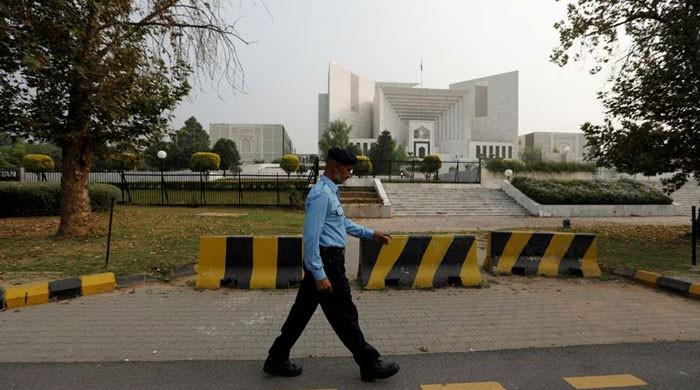
Supreme Court annuls trials of civilians in military courts
Published
2 years agoon
By
Farwa
In a unanimous verdict, a five-member bench of the Supreme Court on Monday declared civilians’ trials in military courts null and void as it admitted the petitions challenging the trial of civilians involved in the May 9 riots triggered by the arrest of Pakistan Tehreek-e-Insaf (PTI) chief Imran Khan in a corruption case.
The five-member apex court bench — headed by Justice Ijaz Ul Ahsan, and comprising Justice Munib Akhtar, Justice Yahya Afridi, Justice Sayyed Mazahar Ali Akbar Naqvi and Justice Ayesha Malik — heard the petitions filed by the PTI chief and others on Monday.
The larger bench in its short verdict ordered that 102 accused arrested under the Army Act be tried in the criminal court and ruled that the trial of any civilian if held in military court has been declared null and void.
The apex court had reserved the verdict earlier today after Attorney General of Pakistan (AGP) Mansoor Usman Awan completed his arguments centred around the domain and scope of the military courts to try the civilians under the Army Act.
At the outset of the hearing today, petitioner lawyer Salman Akram Raja told the bench that trials of civilians already commenced before the top court’s verdict in the matter.
Responding to this, Justice Ahsan said the method of conducting proceedings of the case would be settled after Attorney General of Pakistan (AGP) Mansoor Usman Awan completed his arguments.
Presenting his arguments, the AGP said he would explain to the court why a constitutional amendment was necessary to form military courts in 2015 to try the terrorists.
Responding to Justice Ahsan’s query, AGP Awan said the accused who were tried in military courts were local as well as foreign nationals.
He said the accused would be tried under Section 2 (1) (D) of the Official Secrets Act and a trial under the Army Act would fulfill all the requirements of a criminal case.
“The trial of the May 9 accused will be held in line with the procedure of a criminal court,” the AGP said.
The AGP said the 21st Amendment was passed because the terrorists did not fall in the ambit of the Army Act.
“Amendment was necessary for the trial of terrorists [then] why amendment not required for the civilians? At the time of the 21st constitutional amendment, did the accused attack the army or installations?” inquired Justice Ahsan.
AGP Awan replied that the 21st Amendment included a provision to try accused involved in attacking restricted areas.
“How do civilians come under the ambit of the Army Act?” Justice Ahsan asked the AGP.
Justice Malik asked AGP Awan to explain what does Article 8 of the Constitution say. “According to Article 8, legislation against fundamental rights cannot be sustained,” the AGP responded.
Justice Malik observed that the Army Act was enacted to establish discipline in the forces. “How can the law of discipline in the armed forces be applied to civilians?” she inquired.
The AGP responded by saying that discipline of the forces is an internal matter while obstructing armed forces from discharging duties is a separate issue.
He said any person facing the charges under the Army Act can be tried in military courts.
“The laws you [AGP] are referring to are related to army discipline,” Justice Ahsan said.
Justice Malik inquired whether the provision of fundamental rights be left to the will of Parliament.
“The Constitution ensures the provision of fundamental rights at all costs,” she added.
If the court opened this door then even a traffic signal violator will be deprived of his fundamental rights, Justice Malik said.
The AGP told the bench that court-martial is not an established court under Article 175 of the Constitution.
At which, Justice Ahsan said court martials are not under Article 175 but are courts established under the Constitution and Law.
After hearing the arguments, the bench reserved the verdict on the petitions.
A day earlier, the federal government informed the apex court that the military trials of civilians had already commenced.
After concluding the hearing, Justice Ahsan hinted at issuing a short order on the petitions.
The government told the court about the development related to trials in the military court in a miscellaneous application following orders of the top court on August 3, highlighting that at least 102 people were taken into custody due to their involvement in the attacks on military installations and establishments.
Suspects express confidence in mly courts
The same day, expressing their “faith and confidence” in military authorities, nine of the May 9 suspects — who are currently in army’s custody — moved the Supreme Court, seeking an order for their trial in the military court be proceeded and concluded expeditiously to “meet the ends of justice”.
Nine out of more than 100 suspects, who were in the army’s custody, filed their petitions in the apex court via an advocate-on-record.
The May 9 riots were triggered almost across the country after former prime minister Imran Khan’s — who was removed from office via a vote of no confidence in April last year — arrest in the £190 million settlement case. Hundreds of PTI workers and senior leaders were put behind bars for their involvement in violence and attacks on military installations.
Last hearing
In response to the move by the then-government and military to try the May 9 protestors in military courts, PTI Chairman Imran Khan, former chief justice Jawwad S Khawaja, lawyer Aitzaz Ahsan, and five civil society members, including Pakistan Institute of Labour Education and Research (Piler) Executive Director Karamat Ali, requested the apex court to declare the military trials “unconstitutional”.
The initial hearings were marred by objections on the bench formation and recusals by the judges. Eventually, the six-member bench heard the petitions.
However, in the last hearing on August 3, the then-chief justice Umar Ata Bandial said the apex court would stop the country’s army from resorting to any unconstitutional moves while hearing the pleas challenging the trial of civilians in military courts.
A six-member bench, led by the CJP and comprising Justice Ijaz Ul Ahsan, Justice Munib Akhtar, Justice Yahya Afridi, Justice Sayyed Mazahar Ali Akbar Naqvi, and Justice Ayesha Malik, heard the case.
In the last hearing, the case was adjourned indefinitely after the Attorney General for Pakistan (AGP) Mansoor Usman Awan assured the then CJP that the military trials would not proceed without informing the apex court.

World
UN experts claim Israeli actions in Gaza ‘violation of international humanitarian law’
Published
2 years agoon
By
Farwa
GENEVA: Following the devastating loss of over 500 innocent lives as a result of an Israeli air strike on a hospital and a school in Gaza, UN experts denounced the “unspeakably cruel” Israeli actions as “crimes against humanity” on Thursday.
They expressed horror over the deadly strike at Al Ahli Arab Hospital, as the incident is said to have happened in response to two threats from Israel that if the hospital’s patients were not evacuated, there would be an impending attack.
Israeli forces have been firing nonstop into Gaza as retaliation for an attack on October 7 by Hamas that, according to Israel, killed at least 1,400 people, most of them civilians.
Since then, at least 3,785 Palestinians have died in the Gaza Strip as a result of Israeli bombing; the majority of these victims were civilians including children, according to the Gaza Health Ministry.
The UN experts said that they were “equally outraged” at the deadly strike on two densely populated refugee camps and the school in Al Maghazi refugee camp, which housed about 4,000 displaced people, on the same day, calling the missile attack on the health facility an “atrocity.”
They brought up grave legal and humanitarian issues regarding Israel’s 16-year blockade of the enclave, its inhabitants, and its ongoing occupation, which has left 2.2 million people without access to basic supplies like food, fuel, water, electricity, and medication.
Prenatal and postnatal care is desperately needed for an estimated 50,000 pregnant women in Gaza, and there are an estimated one million internally displaced persons living in the Gaza Strip.
The UN experts reminded everyone that starvation of civilians is forbidden by international humanitarian law and has been repeatedly denounced by the UN Security Council as a means of warfare.
“The unlawful denial of humanitarian access and depriving civilians of objects indispensable to their survival are also a violation of international humanitarian law,” the experts warned.
The UN experts called for the protection of all humanitarian workers after the World Health Organization (WHO) documented more than 136 attacks on health care services in the occupied Palestinian territory, including 59 attacks on the Gaza Strip, which resulted in the death of at least 16 health workers since October 7.
Israeli bombardment on Gaza has also killed 15 staff of the United Nations Refugee Works Agency (UNRWA) and four Palestine Red Crescent paramedics in an ambulance. An ambulance driver of Magen David Adom in Israel lost his life while driving to treat injured people.
“The complete siege of Gaza coupled with unfeasible evacuation orders and forcible population transfers, is a violation of international humanitarian and criminal law. It is also unspeakably cruel,” the experts said.
They recalled that the wilful and systematic destruction of civilian homes and infrastructure, known as “domicide”, and cutting off drinking water, medicine, and essential food is clearly prohibited under international criminal law, The News reported.
“We are sounding the alarm: There is an ongoing campaign by Israel resulting in crimes against humanity in Gaza. Considering statements made by Israeli political leaders and their allies, accompanied by military action in Gaza and escalation of arrests and killing in the West Bank, there is also a risk of genocide against the Palestine people,” they noted.
“There are no justifications or exceptions for such crimes. We are appalled by the inaction of the international community in the face of belligerent war-mongering,” the experts said.
“The Gazan population, half of whom are children, have already suffered many decades of unlawful brutal occupation and lived under the blockade for 16 years,” the experts said.
“It is time to immediately cease fire and ensure urgent and unimpeded access to essential humanitarian supplies, including food, water, shelter, medicine, fuel and electricity. The physical safety of the civilian population must be guaranteed,” the experts said.
“The occupation needs to end and there must be reparation, restitution and reconstruction, towards full justice for Palestinians,” they said.
World
Iran urges Muslim nations to sanction Israel after Gaza hospital ‘massacre’
Published
2 years agoon
By
Farwa
Iran on Wednesday urged members of the Organisation of Islamic Cooperation (OIC) to take a strong stance against Israel following the deadly strike on al-Ahli Arab Hospital in Gaza, claiming more than 500 lives.
Iranian Foreign Minister Hossein Amirabdollahian called for the imposition of an oil embargo and other sanctions on Israel and the expulsion of all Israeli ambassadors. He made these remarks during an emergency OIC meeting in Jeddah, Saudi Arabia, which aimed to address the escalating Israeli-Palestinian conflict.
According to an official statement, the Iranian FM “calls for an immediate and complete embargo on Israel by Islamic countries, including oil sanctions, in addition to expelling Israeli ambassadors if relations with the Zionist regime have been established”.
Amirabdollahian also proposed the creation of a team of Islamic lawyers to document potential war crimes committed by Israel in Gaza. It’s important to note that Iran has no diplomatic relations with Israel.
The call for action came after a devastating Israeli air raid on a hospital in Gaza, resulting in a high casualty count, according to Palestinians. Gaza’s Health Ministry spokesperson, Ashraf al-Qudra, reported that hundreds of people lost their lives, and rescue efforts were still underway to recover bodies from the rubble.
The hospital strike triggered widespread pro-Palestinian protests across the Middle East and North Africa. Demonstrations were staged at Israeli embassies in Jordan, and Turkey, and near the US embassy in Lebanon. Protests also occurred in Iran, Morocco, Tunisia, Yemen, and Iraq.
Palestinian President Mahmoud Abbas condemned the hospital attack as a “hideous war massacre” and accused Israel of crossing the red lines. In response, Israel’s military denied responsibility for the attack and claimed that a misfired Palestinian rocket struck the hospital.
Israeli Prime Minister Benjamin Netanyahu emphasised that it was “barbaric terrorists in Gaza” who attacked the hospital, not the Israeli Defense Forces (IDF). He argued that those responsible for killing Israeli children were also endangering Palestinian children.
The conflict’s toll on human lives has been staggering, with Gaza’s health authorities reporting at least 3,300 deaths and 13,000 injuries over the course of the 11-day conflict. In Israel, the death toll reached 1,400, with 4,475 injuries.
The situation has garnered international attention and condemnation, with calls for a peaceful resolution to the crisis growing louder.
Supreme Court annuls trials of civilians in military courts
Sea conditions ‘very high’ as Cyclone Tej moves towards northwestward
IMF condition: ECC set to green light gas tariff hike today
Barwaan Khiladi: Kinza Hashmi discusses her role as Alia
Snap launches tools for parents to monitor teens’ contacts
WATCH: Pakistani traveller deported from Dubai for damaging plane mid-air
Learn First | How to Create Amazon Seller Account in Pakistan – Step by Step
Sajjad Jani Funny Mushaira | Funny Poetry On Cars🚗 | Funny Videos | Sajjad Jani Official Team