Connect with us

Sports

India face heat for ‘chopping and changing’ after Asia Cup failure

Published

on

DUBAI: Rohit Sharma’s India have been slammed for “chopping and changing” as they failed to make the final of the Asia Cup Twenty20 tournament with a game to go.

Pakistan’s win over Afghanistan on Wednesday knocked out India from the tournament, which was a warm-up for next month’s T20 World Cup.

India, who won the previous Asia Cup in 2018 and played in a 50-over format, came in as pre-tournament favourites but lost their first two Super Four matches to Pakistan and Sri Lanka.

“I think there was too much chopping and changing done after just one defeat,” former India wicketkeeper Parthiv Patel told the website cricbuzz.

“We lost against Pakistan and made three-four changes.”

India’s tinkering was not confined to the latter stages: Dinesh Karthik had been the wicketkeeper for India’s opening win against Pakistan, but Rishabh Pant was brought back behind the stumps for the next match.

Karthik, a hard-hitting batsman who specialises as a finisher in the short format, missed both Super Four matches as the left-handed Pant was retained in the middle-order.

“The consistency and the clarity of thought is so important, especially when you play this T20 format,” said Patel.

“Dinesh Karthik came in and he was left (out). Rishabh Pant came in and would be thinking whether I am a permanent member of the team or not.”

Former India captain Sunil Gavaskar blamed an inability to be flexible with onfield plans for India’s disappointing results.

“Too much theory … is not a very good thing. What happens on the field is completely different,” Gavaskar told India Today.

“You have to have a Plan A, B and C, which is where the Indian team in this particular tournament has not had alternate plans.

“They seem to have been stymied when things started to unravel for them.

“Cricket is a game that changes in seconds, particularly the T20 format, and you’ve got to be ready for it.”

Shami sidelined

India can start to put things right when they play Afghanistan in a dead rubber Super Four Asia Cup match in Dubai on Thursday.

They will have home series against Australia and South Africa to cement their team plans before the T20 World Cup begins on October 16 in Australia.

India’s lone T20 World Cup success came at the inaugural tournament in 2007, and Gavaskar implored the team to “please see the areas where you can improve and plug those gaps”.

India remain top of the T20 team rankings but have constantly faltered at global international tournaments with their last International Cricket Council title coming at the 2013 Champions Trophy.

India failed to make the semi-finals of last year’s T20 World Cup in the United Arab Emirates and in 2019 lost in the semi-finals of the 50-over World Cup in England.

But captain Rohit played down his team’s Asia Cup failure after they lost a close match to Sri Lanka on Tuesday.

“In tournaments like the World Cup, Asia Cup, here the challenge is you face different teams with different plans,” said Rohit.

“But we should not think about it too much. Yes, pressure is there, and our work is to make the boys realise how to deliver in pressure situations.”

Former coach Ravi Shastri criticised the team choices and remained puzzled by the exclusion of veteran pace bowler Mohammed Shami.

“I am completely amazed to see how Mohammed Shami has been sidelined by the current Indian team management and the selectors,” Shastri said on Star Sports.

Injuries to pace spearhead Jasprit Bumrah and Harshal Patel made India turn to Avesh Khan, who fell sick in Dubai and was unavailable for selection in the last two matches.

“The Indian bowling hasn’t looked that effective in this year’s Asia Cup,” said Shastri.

“And a veteran like Shami should have certainly made it to the squad.”

Business

Supreme Court annuls trials of civilians in military courts

Published

on

By

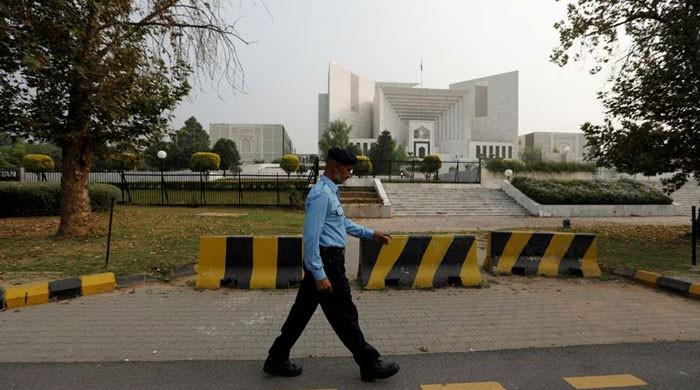
In a unanimous verdict, a five-member bench of the Supreme Court on Monday declared civilians’ trials in military courts null and void as it admitted the petitions challenging the trial of civilians involved in the May 9 riots triggered by the arrest of Pakistan Tehreek-e-Insaf (PTI) chief Imran Khan in a corruption case.

The five-member apex court bench — headed by Justice Ijaz Ul Ahsan, and comprising Justice Munib Akhtar, Justice Yahya Afridi, Justice Sayyed Mazahar Ali Akbar Naqvi and Justice Ayesha Malik — heard the petitions filed by the PTI chief and others on Monday.

The larger bench in its short verdict ordered that 102 accused arrested under the Army Act be tried in the criminal court and ruled that the trial of any civilian if held in military court has been declared null and void.  

The apex court had reserved the verdict earlier today after Attorney General of Pakistan (AGP) Mansoor Usman Awan completed his arguments centred around the domain and scope of the military courts to try the civilians under the Army Act. 

At the outset of the hearing today, petitioner lawyer Salman Akram Raja told the bench that trials of civilians already commenced before the top court’s verdict in the matter.

Responding to this, Justice Ahsan said the method of conducting proceedings of the case would be settled after Attorney General of Pakistan (AGP) Mansoor Usman Awan completed his arguments.

Presenting his arguments, the AGP said he would explain to the court why a constitutional amendment was necessary to form military courts in 2015 to try the terrorists.

Responding to Justice Ahsan’s query, AGP Awan said the accused who were tried in military courts were local as well as foreign nationals.

He said the accused would be tried under Section 2 (1) (D) of the Official Secrets Act and a trial under the Army Act would fulfill all the requirements of a criminal case.

“The trial of the May 9 accused will be held in line with the procedure of a criminal court,” the AGP said.

The AGP said the 21st Amendment was passed because the terrorists did not fall in the ambit of the Army Act.

“Amendment was necessary for the trial of terrorists [then] why amendment not required for the civilians? At the time of the 21st constitutional amendment, did the accused attack the army or installations?” inquired Justice Ahsan.

AGP Awan replied that the 21st Amendment included a provision to try accused involved in attacking restricted areas.

“How do civilians come under the ambit of the Army Act?” Justice Ahsan asked the AGP.

Justice Malik asked AGP Awan to explain what does Article 8 of the Constitution say. “According to Article 8, legislation against fundamental rights cannot be sustained,” the AGP responded.

Justice Malik observed that the Army Act was enacted to establish discipline in the forces. “How can the law of discipline in the armed forces be applied to civilians?” she inquired.

The AGP responded by saying that discipline of the forces is an internal matter while obstructing armed forces from discharging duties is a separate issue.

He said any person facing the charges under the Army Act can be tried in military courts.

“The laws you [AGP] are referring to are related to army discipline,” Justice Ahsan said.

Justice Malik inquired whether the provision of fundamental rights be left to the will of Parliament.

“The Constitution ensures the provision of fundamental rights at all costs,” she added.

If the court opened this door then even a traffic signal violator will be deprived of his fundamental rights, Justice Malik said.

The AGP told the bench that court-martial is not an established court under Article 175 of the Constitution.

At which, Justice Ahsan said court martials are not under Article 175 but are courts established under the Constitution and Law.

After hearing the arguments, the bench reserved the verdict on the petitions.

A day earlier, the federal government informed the apex court that the military trials of civilians had already commenced.

After concluding the hearing, Justice Ahsan hinted at issuing a short order on the petitions. 

The government told the court about the development related to trials in the military court in a miscellaneous application following orders of the top court on August 3, highlighting that at least 102 people were taken into custody due to their involvement in the attacks on military installations and establishments. 

Suspects express confidence in mly courts

The same day, expressing their “faith and confidence” in military authorities, nine of the May 9 suspects — who are currently in army’s custody — moved the Supreme Court, seeking an order for their trial in the military court be proceeded and concluded expeditiously to “meet the ends of justice”.

Nine out of more than 100 suspects, who were in the army’s custody, filed their petitions in the apex court via an advocate-on-record.

The May 9 riots were triggered almost across the country after former prime minister Imran Khan’s — who was removed from office via a vote of no confidence in April last year — arrest in the £190 million settlement case. Hundreds of PTI workers and senior leaders were put behind bars for their involvement in violence and attacks on military installations.

Last hearing

In response to the move by the then-government and military to try the May 9 protestors in military courts, PTI Chairman Imran Khan, former chief justice Jawwad S Khawaja, lawyer Aitzaz Ahsan, and five civil society members, including Pakistan Institute of Labour Education and Research (Piler) Executive Director Karamat Ali, requested the apex court to declare the military trials “unconstitutional”.

The initial hearings were marred by objections on the bench formation and recusals by the judges. Eventually, the six-member bench heard the petitions.

However, in the last hearing on August 3, the then-chief justice Umar Ata Bandial said the apex court would stop the country’s army from resorting to any unconstitutional moves while hearing the pleas challenging the trial of civilians in military courts.

A six-member bench, led by the CJP and comprising Justice Ijaz Ul Ahsan, Justice Munib Akhtar, Justice Yahya Afridi, Justice Sayyed Mazahar Ali Akbar Naqvi, and Justice Ayesha Malik, heard the case.

In the last hearing, the case was adjourned indefinitely after the Attorney General for Pakistan (AGP) Mansoor Usman Awan assured the then CJP that the military trials would not proceed without informing the apex court.

Continue Reading

Sports

World Cup 2023: Pakistan opt to bowl first against Australia after winning toss

Published

on

By

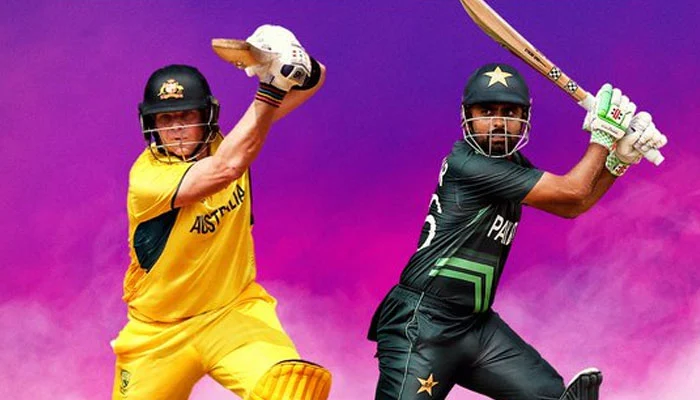
Pakistan has asked Australia to bat first after winning the toss in their fourth match of the ICC Men’s Cricket World Cup at the Chinnaswamy Stadium in India’s Bangalore on Friday (today).

Both the Green Shirts and Aussies are looking to clinch a victory, as both teams prepare to take on one another in the round-robin stage of the major cricket event.

The Babar Azam-led team has so far won two out of three total games played, while Pat Cummins side has only managed to secure one win out of its total three matches in the tournament.

For today’s match Pakistan have rested Shadab Khan and brought in Usama Mir as his replacement. 

Playing XI

Pakistan: Abdullah Shafique, Imam-ul-Haq, Babar Azam (c), Mohammad Rizwan (wk), Saud Shakeel, Iftikhar Ahmed, Mohammad Nawaz, Usama Mir, Hasan Ali, Shaheen Afridi, Haris Rauf.

Australia: David Warner, Mitchell Marsh, Steven Smith, Marnus Labuschagne, Josh Inglis (wk), Glenn Maxwell, Marcus Stoinis, Mitchell Starc, Pat Cummins (capt), Adam Zampa, Josh Hazlewood.

Continue Reading

Pakistan

PCB ‘dismisses’ objections over players support for Palestinians

Published

on

By

LAHORE: Pakistan’s cricket team, which is currently busy participating in the ICC Men’s T20 Cricket World Cup, has shown their firm support and shared their prayers for all Palestinians suffering at the hands of Israel.

However, there have been many questions raised by Indian fans and cricket experts on the players’ constant support for Palestine asking ICC — the governing body of the game — whether such moves were allowed in the tournament.

According to sources, the Pakistan Cricket Board (PCB) rejected the objections over players’ conduct saying: “The team’s expression of solidarity was a personal decision.”

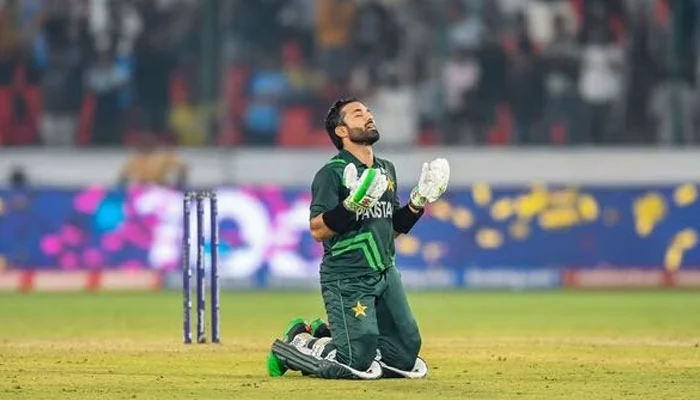
Pakistan’s national team on Wednesday, posted a picture of the Palestinian flag on their individual X, formerly known as Twitter, accounts to show that they stand in solidarity with Palestine and that they are praying for the people suffering there including children.

Prior to this Pakistan’s wicket-keeper batsman, Mohammad Rizwan, dedicated the team’s victory over Sri Lanka to his “brothers and sisters in Gaza”.

Meanwhile, Indian fans and cricket experts used the team’s support for Palestine to create controversies, claiming that the national team had violated ICC rules.

Sources from PCB added that the team is “allowed to express whatever they wanted to,” and that the players “did not violate any code of conduct by the ICC or PCB”.

The Health Ministry in Gaza reports that at least 3,061 Palestinians have died and over 13,750 more have been injured as a result of Israel’s shelling.

Pakistan has categorically condemned the Israeli atrocities and called for an immediate cessation of the bombardment, which has not even spared hospitals or schools, in solidarity with its Palestinian brothers and sisters.

Even Pakistani cricket legends who are not participating in the team anymore showed their support for Palestine.

Moreover, Pakistan is set to face Australia tomorrow (Friday) in M Chinnaswamy Stadium, Bengaluru after a few days of rest.

Continue Reading

Trending