Politics
FIA grills Imran Khan in Attock jail over ‘missing cipher copy’
Published
2 years agoon
By
Farwa
- JIT “meets former PM in the office of deputy superintendent of jail”.
- Recently, reports emerge claiming JIT finds ‘material’ against Khan.
- Retention of the cipher’s copy is an offence, according to sources.
A joint investigation team (JIT) of the Federal Investigation Agency (FIA) interrogated Pakistan Tehreek-e-Insaf (PTI) incarcerated Chairman Imran Khan in a case related to the cablegate saga — a cipher what the deposed prime minister claims contains details of a threat made by the United States against his government, it emerged on Wednesday.
In a public gathering on March 27, 2022, in Islamabad, Khan brandished a letter claiming that it was evidence of an “international conspiracy” backed by the US to topple his government.
Last month, the probe agency had grilled the deposed prime minister — who was removed from office via a no-confidence motion in April last year — for nearly two hours in the case after the Lahore High Court (LHC) withdrew a stay order against the call-up notice to Khan by the FIA into the audio leak involving the US diplomatic cable.
The FIA launched investigations against the ex-prime minister for allegedly making public a confidential diplomatic cable and keeping it in his possession.
Earlier today, FIA’s Counter-Terrorism Wing registered a case in connection with the “missing cipher” from the official record of the Prime Minister’s Office and indicted Khan in the case, well-placed sources said.
They also confirmed that the JIT grilled Khan in Attock jail on Tuesday (yesterday). “The JIT met Khan in the office of the deputy superintendent jail,” according to FIA sources.
JIT finds ‘material’ against Khan
Last week, reports emerged that the JIT probing the cipher issue was nearing the conclusion of its findings but the latest publication of alleged content of the secret cable document in an online American news organisation has forced it to expand its investigation to cover the aspect of the leak to the media.
Informed sources said the JIT was keen to see how and who had leaked the document’s content to the media and whether the content of the cipher, as shared by The Intercept, is original or exaggerated.
These sources hoped that the probe would conclude within a week or 10 days.
Retention of the cipher copy by the former prime minister, the source said, is an admitted fact. It is an offence, the source said. Twisting and manipulation of the secret document for political gain is also a violation of the law, added the source.
The JIT, which was constituted by the former government, had already grilled Khan, Fawad Chaudhry, Shah Mehmood Qureshi, Asad Umar, and Foreign Office officials.
It is said that the JIT may not need to grill anyone else.
Azam Khan ‘recorded’ a statement
Last month, the cipher drama took a new turn when former premier Khan’s then-principal secretary Azam Khan “recorded” a statement, terming the US cipher a “conspiracy” used by the ex-PM to “manipulate for creating a narrative against establishment and opposition.
Azam, who had been “missing” since June this year, recorded his statement under CrPC 164 before a magistrate, sources said.
The former bureaucrat, in his confession, said when he provided the ex-premier with the cipher, he was “euphoric” and termed the language a “US blunder”. The former prime minister, according to Azam, then said that the cable could be used for “creating a narrative against establishment and opposition”.
In response to the development, Imran termed Azam an “honest man” and said he would not accept the statement until he heard the bureaucrat say it himself.
The PTI, however, termed the statement attributed to the ex-principal secretary, on the US cipher conspiracy “unverified”, and said it was a “set of contradictions”.
Cablegate
The controversy first emerged on March 27, 2022, when Imran Khan — just days before his ouster — brandished a letter, claiming that it was a cipher from a foreign nation, which mentioned that his government should be removed from power.
He did not reveal the contents of the letter nor mention the name of the nation that had sent it. But a few days later, he named the United States and said that Assistant Secretary of State for South and Central Asia Affairs Donald Lu had sought his removal.
The cipher was about former Pakistan ambassador to the US Asad Majeed’s meeting with Lu.
The former prime minister, claiming that he was reading contents from the cipher, said that “all will be forgiven for Pakistan if Imran Khan is removed from power”.
Then on March 31, the National Security Committee (NSC) took up the matter and decided to issue a “strong demarche” to the country for its “blatant interference in the internal affairs of Pakistan”.
Later, after his removal, then-prime minister Shehbaz Sharif convened a meeting of the NSC, which came to the conclusion that it had found no evidence of a foreign conspiracy in the cipher.
Months later, two audio leaks took the internet by storm and shocked the public after these events. The former prime minister, then-federal minister Asad Umar, and Azam could allegedly be heard discussing the US cipher and how to use it in their interest.
On September 30, the federal cabinet took notice of the matter and constituted a committee to probe the contents of the audio leaks.
In October, the cabinet gave the green signal to initiate action against the former prime minister and handed over the case to the FIA.
Once the FIA was given the task to probe the matter, it summoned Khan, Umar, and other leaders of the party, but the PTI chief challenged the summons and secured a stay order from the court.
On July 18, the Lahore High Court recalled the stay order against the call-up notice to Imran by the FIA.
The FIA then again issued summons to Khan, Umar, and Qureshi.
You may like
-
Supreme Court annuls trials of civilians in military courts
-
Arshad Sharif’s wife files lawsuit against Kenyan police over journalist’s killing
-
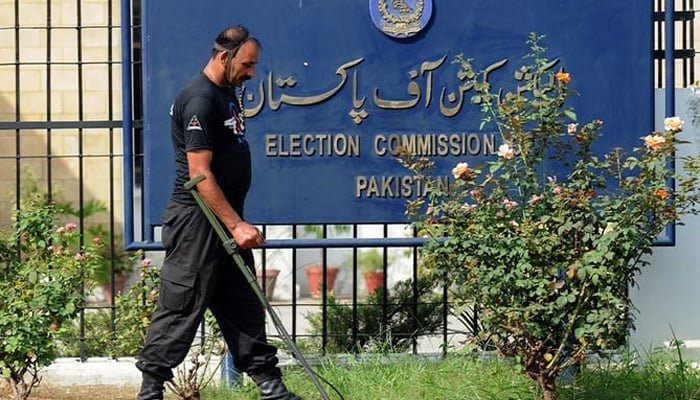
PTI urges ECP to issue order on election symbol
-
Task force on the cards as NAB aims to boost accountability process
-
PM Kakar to attend UN climate moot in UAE next month
-
PPP raises concerns over ‘special relief’ to Nawaz on return
Business
Supreme Court annuls trials of civilians in military courts
Published
2 years agoon
By
Farwa
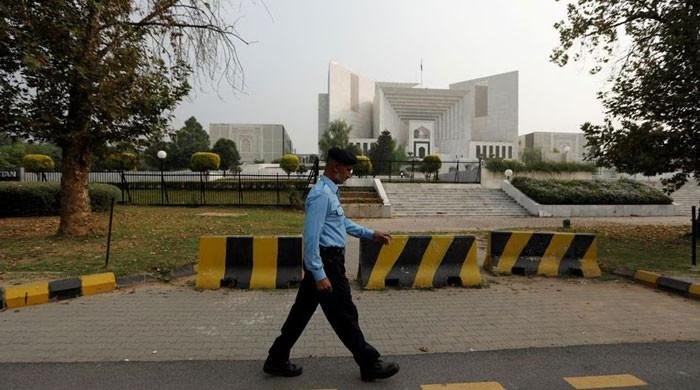
In a unanimous verdict, a five-member bench of the Supreme Court on Monday declared civilians’ trials in military courts null and void as it admitted the petitions challenging the trial of civilians involved in the May 9 riots triggered by the arrest of Pakistan Tehreek-e-Insaf (PTI) chief Imran Khan in a corruption case.
The five-member apex court bench — headed by Justice Ijaz Ul Ahsan, and comprising Justice Munib Akhtar, Justice Yahya Afridi, Justice Sayyed Mazahar Ali Akbar Naqvi and Justice Ayesha Malik — heard the petitions filed by the PTI chief and others on Monday.
The larger bench in its short verdict ordered that 102 accused arrested under the Army Act be tried in the criminal court and ruled that the trial of any civilian if held in military court has been declared null and void.
The apex court had reserved the verdict earlier today after Attorney General of Pakistan (AGP) Mansoor Usman Awan completed his arguments centred around the domain and scope of the military courts to try the civilians under the Army Act.
At the outset of the hearing today, petitioner lawyer Salman Akram Raja told the bench that trials of civilians already commenced before the top court’s verdict in the matter.
Responding to this, Justice Ahsan said the method of conducting proceedings of the case would be settled after Attorney General of Pakistan (AGP) Mansoor Usman Awan completed his arguments.
Presenting his arguments, the AGP said he would explain to the court why a constitutional amendment was necessary to form military courts in 2015 to try the terrorists.
Responding to Justice Ahsan’s query, AGP Awan said the accused who were tried in military courts were local as well as foreign nationals.
He said the accused would be tried under Section 2 (1) (D) of the Official Secrets Act and a trial under the Army Act would fulfill all the requirements of a criminal case.
“The trial of the May 9 accused will be held in line with the procedure of a criminal court,” the AGP said.
The AGP said the 21st Amendment was passed because the terrorists did not fall in the ambit of the Army Act.
“Amendment was necessary for the trial of terrorists [then] why amendment not required for the civilians? At the time of the 21st constitutional amendment, did the accused attack the army or installations?” inquired Justice Ahsan.
AGP Awan replied that the 21st Amendment included a provision to try accused involved in attacking restricted areas.
“How do civilians come under the ambit of the Army Act?” Justice Ahsan asked the AGP.
Justice Malik asked AGP Awan to explain what does Article 8 of the Constitution say. “According to Article 8, legislation against fundamental rights cannot be sustained,” the AGP responded.
Justice Malik observed that the Army Act was enacted to establish discipline in the forces. “How can the law of discipline in the armed forces be applied to civilians?” she inquired.
The AGP responded by saying that discipline of the forces is an internal matter while obstructing armed forces from discharging duties is a separate issue.
He said any person facing the charges under the Army Act can be tried in military courts.
“The laws you [AGP] are referring to are related to army discipline,” Justice Ahsan said.
Justice Malik inquired whether the provision of fundamental rights be left to the will of Parliament.
“The Constitution ensures the provision of fundamental rights at all costs,” she added.
If the court opened this door then even a traffic signal violator will be deprived of his fundamental rights, Justice Malik said.
The AGP told the bench that court-martial is not an established court under Article 175 of the Constitution.
At which, Justice Ahsan said court martials are not under Article 175 but are courts established under the Constitution and Law.
After hearing the arguments, the bench reserved the verdict on the petitions.
A day earlier, the federal government informed the apex court that the military trials of civilians had already commenced.
After concluding the hearing, Justice Ahsan hinted at issuing a short order on the petitions.
The government told the court about the development related to trials in the military court in a miscellaneous application following orders of the top court on August 3, highlighting that at least 102 people were taken into custody due to their involvement in the attacks on military installations and establishments.
Suspects express confidence in mly courts
The same day, expressing their “faith and confidence” in military authorities, nine of the May 9 suspects — who are currently in army’s custody — moved the Supreme Court, seeking an order for their trial in the military court be proceeded and concluded expeditiously to “meet the ends of justice”.
Nine out of more than 100 suspects, who were in the army’s custody, filed their petitions in the apex court via an advocate-on-record.
The May 9 riots were triggered almost across the country after former prime minister Imran Khan’s — who was removed from office via a vote of no confidence in April last year — arrest in the £190 million settlement case. Hundreds of PTI workers and senior leaders were put behind bars for their involvement in violence and attacks on military installations.
Last hearing
In response to the move by the then-government and military to try the May 9 protestors in military courts, PTI Chairman Imran Khan, former chief justice Jawwad S Khawaja, lawyer Aitzaz Ahsan, and five civil society members, including Pakistan Institute of Labour Education and Research (Piler) Executive Director Karamat Ali, requested the apex court to declare the military trials “unconstitutional”.
The initial hearings were marred by objections on the bench formation and recusals by the judges. Eventually, the six-member bench heard the petitions.
However, in the last hearing on August 3, the then-chief justice Umar Ata Bandial said the apex court would stop the country’s army from resorting to any unconstitutional moves while hearing the pleas challenging the trial of civilians in military courts.
A six-member bench, led by the CJP and comprising Justice Ijaz Ul Ahsan, Justice Munib Akhtar, Justice Yahya Afridi, Justice Sayyed Mazahar Ali Akbar Naqvi, and Justice Ayesha Malik, heard the case.
In the last hearing, the case was adjourned indefinitely after the Attorney General for Pakistan (AGP) Mansoor Usman Awan assured the then CJP that the military trials would not proceed without informing the apex court.

Politics
Arshad Sharif’s wife files lawsuit against Kenyan police over journalist’s killing
Published
2 years agoon
By
Farwa
- Javeria Siddique filed lawsuit to “get justice for her husband”.
- Lawsuit also seeks “public apology” from Kenyan attorney general.
- Journalist was shot dead in October 2022 by Kenyan police officers.
NAIROBI: Slain journalist Arshad Sharif’s wife has registered a case against the Kenyan Elite police unit for her husband’s murder in Kenya, reported The News.
Javeria Siddique in her petition has made the attorney general of Kenya, national police service of the country and the director public prosecution respondents.
She has urged that the officers involved in Sharif’s murder be put on trial and be punished for their crime.
She urged the court to issue directives to the Kenyan attorney general (AG) to apologise to Sharif’s family within seven days of court’s orders, admit facts, accept responsibility and issue a written apology at public level.
Sharif’s widow, while confirming the filing of the case, said: “I have got a case registered in Nairobi for seeking justice in murder case of my husband. We got the case registered against general service unit of Kenya because they committed crime publicly and then admitted it was matter of mistaken identity. But to me it was targeted murder. But Kenyan government never apologised. They never contacted us.”
The registration of the case comes after it was reported the five Kenyan police officers who were involved in the killing quietly resumed their duties without any action taken against them.
Nine months after the killing of the journalist at a roadblock in a remote part of the East African country, the five police officers involved in the brutal killing are enjoying full police perks and their suspensions have turned out to be only a whitewash by the Kenyan authorities.
A trusted security source revealed that the five cops involved in the fatal shootout are back to work and two of them have been promoted to senior ranks.
Kenya’s Independent Policing and Oversight Authority (IPOA), the body that is tasked with investigating the conduct of police officers, despite making a promise to give an update on Sharif’s murder within weeks has not made its findings public in over nine months.
Sharif had arrived in the Kenyan capital on August 20 and died on October 23 last year in a shootout in which his driver Khurram Ahmad survived miraculously.
The 49-year-old had fled Pakistan in August to avoid arrest after he was slapped with several cases including sedition charges over an interview with Shahbaz Gill, a former aide of Imran Khan.
After reaching Kenya’s capital Nairobi, Sharif stayed at the Riverside penthouse of businessman Waqar Ahmad who is also Khurram’s brother who was driving him when he was killed.
The journalist was being driven from Ammodump Kwenia training camp, a joint which is owned by Waqar and they were heading to Nairobi County where he was staying.
- ECP notice on inter-party elections “serious mistake,” says PTI.
- ECP has no justification for depriving PTI of symbol: Senator Zafar.
- 41 days passed but detailed decision not issued yet: PTI’s counsel.
ISLAMABAD: The Pakistan Tehreek-e-Insaf (PTI) has urged the Election Commission of Pakistan (ECP) to issue its verbal order regarding issuance of election symbol and reminded the electoral body of its constitutional duty to hold free and fair elections in the country, The News reported on Thursday.
Senator Barrister Syed Ali Zafar, the party’s counsel, on Wednesday filed an application with the Election Commission requesting for issuance of a detailed written order in the interest of justice and fairness.
The party has urged the Election Commission to issue a detailed decision without delay in light of its announcement concerning issuance of election symbols.
According to Senator Zafar, the Election Commission had issued a notice to the PTI for refusing to issue the symbol of “bat” on the basis of intra-party elections.
He insisted the commission’s notice on the basis of inter-party elections was a serious mistake, as the PTI had held intra-party elections on June 9, 2022 as per its constitution.
He maintained that the ECP had no justification of depriving the PTI of its symbol after holding the intra-party elections, as the electoral body had never objected to the intra-party elections but identified some defects in the submitted document, which had been removed.
The Election Commission in its August 30, 2023 decision, he pointed out, accepted the PTI’s decision to hold the intra-party elections and announced the decision to issue the election symbol of “bat” and after the August 30 decision of the Election Commission, the matter had become final and complete.
He recalled that at the time of the verbal announcement of the August 30 decision, the Election Commission announced to issue a detailed decision in this regard and this was widely highlighted in print, electronic and social media.
However, he noted, 41 days had passed since the August 30 decision, but a detailed decision had not yet been provided.
“PTI is the largest political party in the country, which is contesting the upcoming elections. Not issuing a detailed decision even after 41 days is a clear violation of fundamental rights, including articles 4, 9, 10A, 15, 16, 17 and 26 of the Constitution,” he said.
Ali Zafar insisted that according to the Constitution, the Election Commission was bound to hold free, fair, impartial and transparent elections, while avoiding detailed decisions was a deviation from this constitutional mandate.
Supreme Court annuls trials of civilians in military courts
Sea conditions ‘very high’ as Cyclone Tej moves towards northwestward
IMF condition: ECC set to green light gas tariff hike today
Barwaan Khiladi: Kinza Hashmi discusses her role as Alia
Snap launches tools for parents to monitor teens’ contacts
WATCH: Pakistani traveller deported from Dubai for damaging plane mid-air
Learn First | How to Create Amazon Seller Account in Pakistan – Step by Step
Sajjad Jani Funny Mushaira | Funny Poetry On Cars🚗 | Funny Videos | Sajjad Jani Official Team