Connect with us

Business

Farmers ‘unhappy’ with govt’s agricultural loan claims

Published

on

The farming community Wednesday demanded further measures from the government despite the State Bank of Pakistan (SBP) report revealing that a substantial amount of Rs1.78 trillion was disbursed by the financial institutions during the fiscal year 2022-23 under the outgoing Prime Minister Shehbaz Sharif’s initiate, ‘Kissan Package’.

The central bank, in its annual report released today, stated that the financial institutions achieved 97.6% of the agriculture credit target of Rs1,819 billion set by the SBP; however, the farming community painted a different picture.

Agriculture Republic Co-founder Aamer Hayat Bhandara, while speaking to Geo.tv, said: “Definitely, the money has poured into the agriculture sector but people faced issues when they sought loans.”

He elaborated that the youngsters, especially, were among those who faced challenges when they contacted banks for loans.

“Banks demanded papers of their land to mortgage the loan; however, mostly the lands are usually registered under their parent’s name as it is a culture here,” he said, adding that therefore, under the prime minister’s plan to encourage and facilitate the youth of Pakistan to adopt agriculture as their occupation has not fully been realised according to the spirit.

Bhandara lamented that under such circumstances the middleman becomes the beneficiary. The purpose of these loans was to enable the farmer to purchase inputs of the yield.

While the government aims to minimise the role of exploiters sitting in the market, their hold gets stronger because when farmers cannot get loans from formal channels, the banks, they go to informal sources, the middleman, who exploits them by applying higher interest rates, he highlighted.

“They exploit farmers and customers alike by first offering loans at higher interest rates and then selling the product at higher prices to the customers, even though they buy products way cheaper from the farmers,” he revealed.

It should be noted that according to the SBP report, the number of loans grew by over 25% compared to Rs1,419 billion disbursed in the fiscal year 2021-22. The outstanding portfolio of agriculture credit also registered a growth of 10% and reached Rs760 billion at the end of June 2023 compared to Rs691 billion at the end of June 2022.

The unprecedented performance in FY23, according to the central bank, was attributed to the collective efforts of the financial institutions and various initiatives taken in the backdrop of several challenges including the devastating floods of 2022, rising input costs and monetary tightening in recent years.

The SBP mentioned that among the various initiatives, SBP’s Champion Bank Model and Agriculture Credit Scoring Model played a key role in supporting financial institutions in extending agriculture financing, particularly in the underserved areas where significant growth was registered in FY2023.

“In addition, the strategic guidance of Agricultural Credit Advisory Committee (ACAC) coupled with rigorous monitoring of financing by SBP provided further support in accelerating agriculture finance,” the report read, adding that the last ACAC meeting, held in December 2022, brought the industry’s focus to the potential of Islamic banking for meeting the needs of the farming community. As a result, Islamic agriculture financing also grew significantly during the year.

Endorsing Bhandara’s views, Concave Agri Services President Muhammad Ali Iqbal told Geo.tv that the amount disbursed under the agri credit schemes by the financial institutions has not made a significant impact on the financial requirements of small and medium farmers.

It was learnt that under the Kissan Package, mostly credit facilities were provided against Agro-machinery with around a 7% interest rate to be paid by the farmers on a district-wise quota basis.

“This kind of facilitation did enable the large-scale farmers to reap benefits. However, due to the rupee-dollar parity the prices of machinery also escalated significantly,” he said.

Citing the report, Iqbal mentioned that the input products’ prices have also increased at least 50% making farming resources meagre for the small and medium farmers. In return, the financial credit requirements also surged outstandingly making it easier for banks to achieve the given target by the central bank.

“It is pertinent to mention that the average loan size for agriculture was around over one million per farmer, which is way beyond the requirements of the small landholders,” he maintained, suggesting that it is now better for policymakers to introduce micro and small credit facilities with concessional interest rates to make farming easy for small and subsistent farmers.

Moreover, the central bank — in a statement released along with the report — highlighted that the state bank’s efforts were further bolstered by the prime minister’s Kissan Package, which provided stimulus to revive the flow of agriculture financing especially in the flood-affected areas. Under the Kissan Package, various measures were implemented to strengthen the agriculture sector in flood-affected regions, which included a waiver of markup on outstanding small loans, interest-free loans for small and marginalized farmers, and risk coverage for banks.

It should be noted that the SBP has also released the annual ranking of banks under the Agriculture Credit Scoring Model to bring transparency and competition among the various agriculture credit providers.

SBP’s scoring model gauges the agriculture credit performance of banks against a multi-dimensional criterion with a particular focus on regional and sectoral performance. Introduced in FY22, the model facilitated the banks to focus on areas where improvement is required to achieve their targets, particularly on improving qualitative aspects.

Business

Supreme Court annuls trials of civilians in military courts

Published

on

By

In a unanimous verdict, a five-member bench of the Supreme Court on Monday declared civilians’ trials in military courts null and void as it admitted the petitions challenging the trial of civilians involved in the May 9 riots triggered by the arrest of Pakistan Tehreek-e-Insaf (PTI) chief Imran Khan in a corruption case.

The five-member apex court bench — headed by Justice Ijaz Ul Ahsan, and comprising Justice Munib Akhtar, Justice Yahya Afridi, Justice Sayyed Mazahar Ali Akbar Naqvi and Justice Ayesha Malik — heard the petitions filed by the PTI chief and others on Monday.

The larger bench in its short verdict ordered that 102 accused arrested under the Army Act be tried in the criminal court and ruled that the trial of any civilian if held in military court has been declared null and void.  

The apex court had reserved the verdict earlier today after Attorney General of Pakistan (AGP) Mansoor Usman Awan completed his arguments centred around the domain and scope of the military courts to try the civilians under the Army Act. 

At the outset of the hearing today, petitioner lawyer Salman Akram Raja told the bench that trials of civilians already commenced before the top court’s verdict in the matter.

Responding to this, Justice Ahsan said the method of conducting proceedings of the case would be settled after Attorney General of Pakistan (AGP) Mansoor Usman Awan completed his arguments.

Presenting his arguments, the AGP said he would explain to the court why a constitutional amendment was necessary to form military courts in 2015 to try the terrorists.

Responding to Justice Ahsan’s query, AGP Awan said the accused who were tried in military courts were local as well as foreign nationals.

He said the accused would be tried under Section 2 (1) (D) of the Official Secrets Act and a trial under the Army Act would fulfill all the requirements of a criminal case.

“The trial of the May 9 accused will be held in line with the procedure of a criminal court,” the AGP said.

The AGP said the 21st Amendment was passed because the terrorists did not fall in the ambit of the Army Act.

“Amendment was necessary for the trial of terrorists [then] why amendment not required for the civilians? At the time of the 21st constitutional amendment, did the accused attack the army or installations?” inquired Justice Ahsan.

AGP Awan replied that the 21st Amendment included a provision to try accused involved in attacking restricted areas.

“How do civilians come under the ambit of the Army Act?” Justice Ahsan asked the AGP.

Justice Malik asked AGP Awan to explain what does Article 8 of the Constitution say. “According to Article 8, legislation against fundamental rights cannot be sustained,” the AGP responded.

Justice Malik observed that the Army Act was enacted to establish discipline in the forces. “How can the law of discipline in the armed forces be applied to civilians?” she inquired.

The AGP responded by saying that discipline of the forces is an internal matter while obstructing armed forces from discharging duties is a separate issue.

He said any person facing the charges under the Army Act can be tried in military courts.

“The laws you [AGP] are referring to are related to army discipline,” Justice Ahsan said.

Justice Malik inquired whether the provision of fundamental rights be left to the will of Parliament.

“The Constitution ensures the provision of fundamental rights at all costs,” she added.

If the court opened this door then even a traffic signal violator will be deprived of his fundamental rights, Justice Malik said.

The AGP told the bench that court-martial is not an established court under Article 175 of the Constitution.

At which, Justice Ahsan said court martials are not under Article 175 but are courts established under the Constitution and Law.

After hearing the arguments, the bench reserved the verdict on the petitions.

A day earlier, the federal government informed the apex court that the military trials of civilians had already commenced.

After concluding the hearing, Justice Ahsan hinted at issuing a short order on the petitions. 

The government told the court about the development related to trials in the military court in a miscellaneous application following orders of the top court on August 3, highlighting that at least 102 people were taken into custody due to their involvement in the attacks on military installations and establishments. 

Suspects express confidence in mly courts

The same day, expressing their “faith and confidence” in military authorities, nine of the May 9 suspects — who are currently in army’s custody — moved the Supreme Court, seeking an order for their trial in the military court be proceeded and concluded expeditiously to “meet the ends of justice”.

Nine out of more than 100 suspects, who were in the army’s custody, filed their petitions in the apex court via an advocate-on-record.

The May 9 riots were triggered almost across the country after former prime minister Imran Khan’s — who was removed from office via a vote of no confidence in April last year — arrest in the £190 million settlement case. Hundreds of PTI workers and senior leaders were put behind bars for their involvement in violence and attacks on military installations.

Last hearing

In response to the move by the then-government and military to try the May 9 protestors in military courts, PTI Chairman Imran Khan, former chief justice Jawwad S Khawaja, lawyer Aitzaz Ahsan, and five civil society members, including Pakistan Institute of Labour Education and Research (Piler) Executive Director Karamat Ali, requested the apex court to declare the military trials “unconstitutional”.

The initial hearings were marred by objections on the bench formation and recusals by the judges. Eventually, the six-member bench heard the petitions.

However, in the last hearing on August 3, the then-chief justice Umar Ata Bandial said the apex court would stop the country’s army from resorting to any unconstitutional moves while hearing the pleas challenging the trial of civilians in military courts.

A six-member bench, led by the CJP and comprising Justice Ijaz Ul Ahsan, Justice Munib Akhtar, Justice Yahya Afridi, Justice Sayyed Mazahar Ali Akbar Naqvi, and Justice Ayesha Malik, heard the case.

In the last hearing, the case was adjourned indefinitely after the Attorney General for Pakistan (AGP) Mansoor Usman Awan assured the then CJP that the military trials would not proceed without informing the apex court.

Continue Reading

Business

IMF condition: ECC set to green light gas tariff hike today

Published

on

By

  • Tariff may go up by 173% for non-protected domestic consumers. 
  • Petroleum Division to push for implementation of hike from Oct 1. 
  • Circular debt to increase by Rs15bn if hike implemented from today.

ISLAMABAD: The Economic Coordination Committee (ECC) will meet today (Monday) to green-light the plan to hike the gas tariff, a key part of the International Monetary Fund (IMF) conditions, including a zero hike in the gas circular debt for the ongoing financial year 2023-24, reported The News.

The government is likely to increase the local gas tariff up to 173% for non-protected domestic consumers, 136.4% for commercial, 86.4% for export and 117% for the non-export industry.

Since there is no budgeted subsidy for even domestic, commercial, and industrial sectors, the high-end consumers will provide cross-subsidies to low-end consumers.

The government’s failure to hike the gas prices from July 1 has forced it to incur a loss of Rs50 billion during the July-September in the gas sector. But the losses will be bridged when the government moves ahead with the increase in the gas tariff which would give enough monetary space to recover with the loss.

As per the publication, the IMF has been taken onboard on this point. It has been informed that the gas prices would be increased in such a manner that it would not increase the circular debt during this financial year, which right now stands at Rs2.9 trillion.

However, now the Petroleum Division will try to ensure that the gas tariff hike is implemented from October 1. If the government decides to implement the hike from today onwards then the circular debt would increase by Rs15 billion.

But there would be no increase in the gas tariff from January 1, 2024, a further gas tariff increase would be implemented as under the law, the review of gas prices is carried out bi-annually.

The cement sector will have to purchase the gas 193.3% higher than the current cost, making it the biggest bearer of the brunt, from 1,500 per MMBtu to Rs4,400 per MMBtu.

The CNG sector, will face the second-highest increase in gas tariff by 143.8% from Rs1,805 per MMBtu to Rs4,400.

If the hike is approved, then it means that cement prices will skyrocket and CNG will be much more expensive than petrol.

The government, however, does not plan on increasing the tariff for tandoors which would ensure that roti prices remain stable.

The summary prepared by the petroleum ministry that is to be pitched today in the ECC meeting shows it has not spared the four protected domestic consumer categories as ostensibly it has not proposed to increase their gas tariffs but hiked their monthly fixed charges from Rs10 to Rs400 per month.

More importantly, the Petroleum Division has also proposed to escalate the per month fixed charges for the first 4 non-protected domestic consumers by 117.4% to Rs1,000 from Rs460 per month from their gas tariffs increase by 50-150%. Also, to be increased are per month fixed charges for the remaining 4 non-protected domestic consumers, by 334.78%, to Rs2,000 from Rs460 per month part, increasing their gas tariff by 100%-173%.

The summary states that SNGPL will now offer a blend of natural gas and RLNG in a 20:80 ratio to non-export industry out of the estimated volumes for industrial consumers, both process and captive, as per petitions filed by SNGPL to OGRA for revenue determination.

The blend offered by the Sui companies shall be reviewed every quarter based on the availability of natural gas and RLNG. And SSGC shall offer a blend of NG and RLNG of 90:10 out of the estimated volumes for industrial consumers, both process and captive, as per petitions filed by SSGC to OGRA for revenue determination.

Coming to the export industry, the summary says that currently, there is a wide price disparity between the industry operating on SSGCL and SNGPL networks. Industry in the north (operating on the SNGPL network) consumes a 50:50 blend of indigenous and RLNG for 9 months (Mar to Nov) and 100% RLNG for 3 months (Dec-Feb), averaging to the current tariff of $9.6/MMBtu (Rs2,790) over the year.

On the other hand, process connections of the industry in the south (operating on SSGCL) are being charged at Rs1,100/MMBtu. SSGC has recently started a supply of blend in the proportion of 75:25 for captive use of gas, which approximates $5.9/MMBtu (Rs1,710).

Continue Reading

Business

Govt to only finance important projects for provinces: SIFC

Published

on

By

  • PSDP listed projects to be presented before CCER for review.
  • Finance minister to chair CCER meeting upon return from Morocco.
  • “Exercise to abandon provincial projects underway,” top official says.

ISLAMABAD: The Special Investment Facilitation Council (SIFC) has decided to only finance extremely important development projects in the provinces with 50% of funds allocated by the federal government and provinces each, The News reported.

The Planning Ministry has, meanwhile, identified all the Public Sector Development Programmes (PSDP) listed projects to be presented before the Cabinet Committee on Economic Revival (CCER) with its aims to scrap all such schemes and save Rs314 billion under the austerity drive.

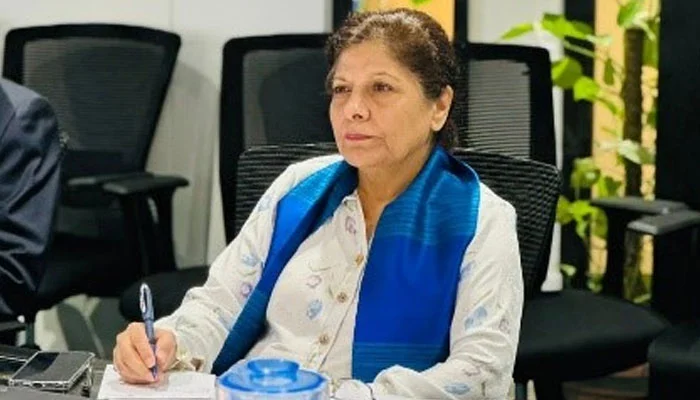
Finance Minister Dr Shamshad Akhtar, following her return from Morocco where she is attending the annual meetings of the World Bank and International Monetary Fund (IMF), will be chairing the CCER meeting.

“The exercise to abandon the provincial nature projects from PSDP list is underway,” a top government official said on Thursday.

It was decided in the last SIFC’s Apex Committee meeting that development projects of provincial nature would only be executed in the future through the cost-sharing of 50%:50% of funds borne by both the Centre and provinces. “If the provincial government does not bear 50% cost on an equal basis, the Centre will not provide its share of funding,” another top official source confirmed while talking to The News.

One senior official said the decision had already been taken up by the Executive Committee of the National Economic Council (ECNEC). The SIFC’s Executive Committee is scheduled to meet early next week to undertake all spadework for tabling it before the apex committee under the chairmanship of Caretaker Prime Minister Anwar-ul-Haq Kakar in the coming weeks.

So far, the SIFC has remained unable to finalise much-awaited multi-billion dollar transactions for attracting investments but it is making all-out efforts to lure foreign investors in areas of mining, IT, agriculture, and others.

One of the future SIFC agendas for considering mechanisms for corporate farming lies on the table. Although some initial work was done during the tenure of late Gen (retd) Musharraf, still there is a need to undertake its basic framework in a detailed manner before striking pacts with international investors. However, it is critical to hire technical experts for drafting international agreements and steering the negotiations against the backdrop of several past agreements ending up in disputes due to a lack of technical capacity.

Meanwhile, different ministries/divisions have been directed to undertake steps under the austerity plans to ensure savings. The Ministry of Finance instructed all its wings and attached departments to review all the foreign visits and banned all those deemed necessary next week.

Continue Reading

Trending